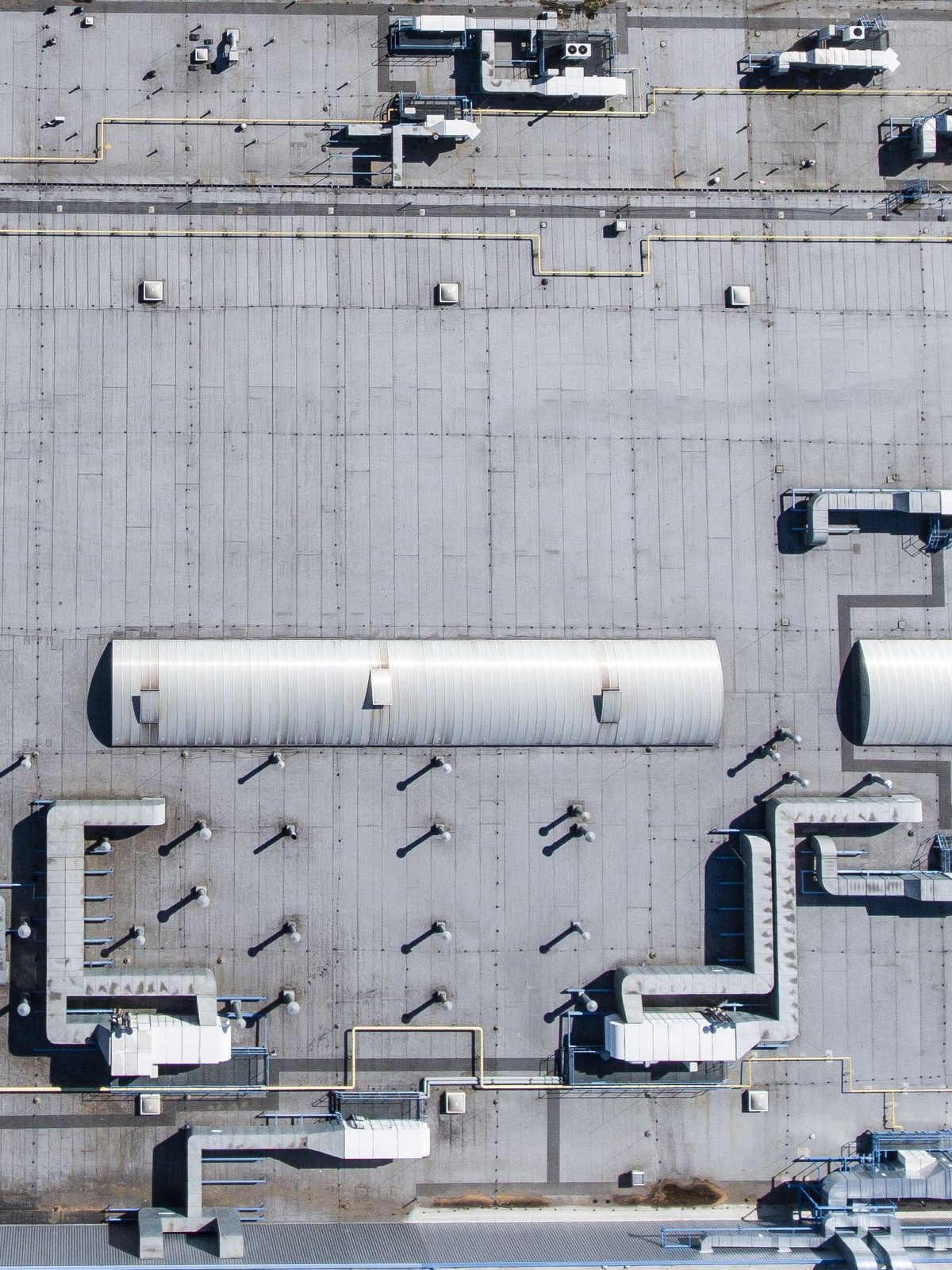
A property condition assessment (PCA) is the building survey buyers and lenders rely on before a commercial acquisition. It records the condition of the major systems and produces an opinion of the costs a new owner should expect. The roof is usually one of its largest single cost items, and one of the easiest to underestimate, because almost everything that drives roof cost sits out of sight.
That asymmetry is why the roof section deserves a closer read than its length suggests. A roof is described in a page or two of a report that may run to fifty, and yet it can carry more capital risk than the rest of the envelope combined. Knowing what the roof section can and cannot tell you is the difference between a number you can underwrite and a number you have inherited.
What a PCA is
Most US assessments follow ASTM E2018, the standard guide for baseline property condition assessments. It describes a walkthrough survey, document review and interviews, leading to a property condition report with an opinion of costs for immediate and near term repairs.
Each of those three inputs matters for the roof, and each has a characteristic weakness.
| Input | What it contributes | Where it falls short on roofs |
|---|---|---|
| Walkthrough survey | Visible condition of the surface, details and drainage | Cannot see the insulation, the layer count or the deck |
| Document review | Age, system type, warranty terms, previous work | Records are often missing, and unpermitted work leaves none |
| Interviews | Leak history, recurring problems, what has been repaired | Depends on the memory and candor of on site staff |
The output is an opinion of cost, not a bid. That distinction runs through every conversation about a PCA. A consultant estimates what the work should cost; a contractor tells you what it will cost on this building with this access on this schedule. The two numbers can differ considerably, and the variables in the next section are the reason.
What the roof section should cover
- Roof types, areas and approximate ages
- Condition of the membrane, flashings and drainage
- Evidence of leaks inside the building
- Warranty status and transferability
- Immediate repairs and their cost
- Expected replacement timing and cost within the hold period
Two of those deserve emphasis because they are the ones most often reported thinly.
Warranty status is not simply whether a warranty exists. It is who holds it, what it actually covers, how long it runs, whether it transfers on sale, what the transfer costs, and what conditions the owner must have met for it to still be live. A warranty voided by undocumented repairs is worth nothing, and that fact almost never appears on the face of the certificate.
Replacement timing within the hold period is the line an asset manager reads first. A roof that reaches the end of its life in year two of a five year hold is a capital event you are buying. One that reaches it in year eight is somebody else’s problem. Where the estimate sits relative to your hold is more important than the estimate itself.
Who writes the roof section
The roof section is usually written by a generalist. The consultant walking the building is assessing every system in it, and their roofing knowledge may be broad rather than deep. That is not a criticism of the discipline; it is the design of a baseline assessment, and it sets a realistic expectation of what the section can deliver.
You can tell a great deal from how the section is written. A consultant who names the membrane type and the attachment method, describes the drainage design rather than just noting ponding, and distinguishes between a failed seam and a failed flashing has looked properly. One that reports the roof as being in fair condition with no further detail has given you a word, not an assessment.
Where the roof matters to the deal, ask at the engagement stage who will assess it and what their roofing background is. It is a fair question, and the answer changes what you do next.
Where baseline reviews fall short
A walkthrough cannot see inside the roof. Wet insulation, the number of existing roof layers, and deck damage are invisible from the surface, yet they drive replacement cost. When the roof is a large share of capital needs, a dedicated roof inspection with core samples and moisture testing gives buyers a number they can negotiate with.
The mechanism is worth stating plainly, because it explains why surface condition and replacement cost are only loosely related.
- Wet insulation must be removed before a new roof goes on. A membrane can look serviceable while the insulation beneath it is saturated over a wide area, and the removal and replacement of that material is labor, disposal and new material that nobody priced.
- Existing layers each have to be torn off, carried down and disposed of. A building carrying more than one roof is carrying more than one demolition. Codes limit how many layers are permitted, so the presence of existing layers can also remove the cheaper overlay option entirely.
- Deck condition decides whether the job is a re roof or a structural repair. Corroded metal deck or deteriorated wood under a long standing leak turns a roofing contract into two contracts.
None of the three is visible from a walkthrough, and all three are answered by cutting a small number of cores.
Reading the cost opinion critically
Three questions expose how much confidence a roof cost opinion deserves.
- What scope is the number based on? A figure for an overlay and a figure for a full tear off with new insulation are not comparable, and the report should say which it assumed.
- What does it assume about what is underneath? If nobody opened the roof, the number assumes dry insulation, one layer and a sound deck. Say that assumption out loud and the risk becomes visible.
- Does it include the things that are not roofing? Lifting and resetting rooftop equipment, temporary protection for tenants, after hours work, crane or hoist time and access restrictions are real costs that sit outside a per unit roofing rate.
When to go deeper
Commission a dedicated roof inspection when any of the following apply: the roof is in the last third of its expected life, the PCA notes ponding or interior leak evidence, the building has visible evidence of multiple layers at a detail, the warranty status cannot be established from documents, or the projected roof spend is large enough to move your return.
Ask for core samples with a recorded layer count, a moisture survey, an equipment and penetration count, and a photographed condition record located on a roof plan. Those four outputs are what turn a condition opinion into a defensible capital number.
Documents to request from the seller
- Original roofing contract, specification and any shop drawings
- Manufacturer warranty certificate and the transfer procedure
- Permits for roof work, including work on rooftop equipment
- Maintenance and inspection records for the whole ownership period
- Every leak report, repair invoice and insurance claim relating to water
Gaps in that list are findings in themselves. A roof with no maintenance record and no permits is a roof whose history you cannot verify, and that uncertainty belongs in your number rather than in your assumptions.
Next
Read the three red flags that most often double a re roof budget, see how roof findings feed capital planning, and check when each step belongs in your deal timeline.
Common questions
Who orders the property condition assessment, the buyer or the lender?
Usually the buyer, and often the lender as well, which is why the same building can be assessed twice inside one transaction.
- The buyer commissions a PCA to understand what it is acquiring and support the price
- The lender commissions or relies on one to size the loan and set any reserve
- A report is addressed to the party who engaged the consultant
- Other parties cannot simply pick it up and rely on it
- Reliance is granted by a letter naming the lender, sometimes for an added fee
Agree that at engagement rather than in the last week before closing. Ask who the report will be addressed to and who may rely on it before the scope is signed, and if you expect to syndicate or bring in a partner, name them then. Adding parties to a completed report is slower and more expensive.
How long does a property condition assessment take?
Field work on a single building is typically one day, and the written report commonly follows one to three weeks later depending on the scope and the consultant's workload.
- The report is the deliverable, and the gap is what collides with a deadline
- Document collection depends on the seller and often arrives late or incomplete
- Tenant coordination in a multi tenant building can take longer than the inspection
- Roof moisture testing is scheduled separately and sometimes depends on weather
Plan backward from the contingency date: decide when you need the report in hand, subtract the writing period and the field days, and that is your booking deadline. If the schedule is already tight, ask for an interim findings call as soon as field work finishes so you can act while the document is written.
What is the difference between a PCA and a roof consultant's report?
A PCA surveys the whole building, with the roof as one section among many. A roof consultant's report covers only the roof, in far greater depth.
- The specialist report usually includes testing a PCA does not
- Core samples, a layer count, moisture scanning and a detailed membrane assessment
- The PCA assessor also covers structure, envelope, services, site and accessibility
- The roof gets the share of the day it can be given
Breadth against depth is the whole distinction, and the two are complements rather than alternatives. The sensible sequence is to commission the PCA, read its roof section, then commission the specialist report when the roof looks like a material cost. Buying both by default is expensive; buying neither on an aging roof is more expensive.
Does ASTM E2018 require the assessor to walk the roof?
It describes a baseline walkthrough survey of readily accessible areas, and treats observation of the roof as part of that survey where safe access exists.
- It does not require destructive testing or the assessor to open the roof
- It allows the consultant to note where access was not possible
- A roof seen from a hatch, an adjacent roof or aerial imagery is a different observation
- A competent consultant says which one happened, so ask if the report is vague
Read the access and limitations language closely, because that is where the real scope lives. The standard is a floor, not a ceiling, and buyers routinely add core sampling, an infrared or capacitance moisture survey and a documented layer count. Where the roof is a significant share of projected capital spend, treat the baseline observation as screening.
Can a lender rely on a property condition assessment the seller commissioned?
Rarely, and it is poor practice to try. It was written for the seller, the consultant owes you no duty, and the scope was chosen by the party with the least interest in finding problems.
- Most lenders require a report addressed to them from a consultant they accept
- Read it anyway, because it shows what the seller knew and when
- Any material item it lists is now a disclosed condition rather than a surprise
- Where it disagrees with your own consultant, the gap is a negotiating fact
Make three checks on any report a seller hands you. How old is it, since a roof assessment ages quickly once the roof is in the last part of its life. What scope was it written to, and did anybody walk the roof or test for moisture. And who is it addressed to. Commission your own regardless.