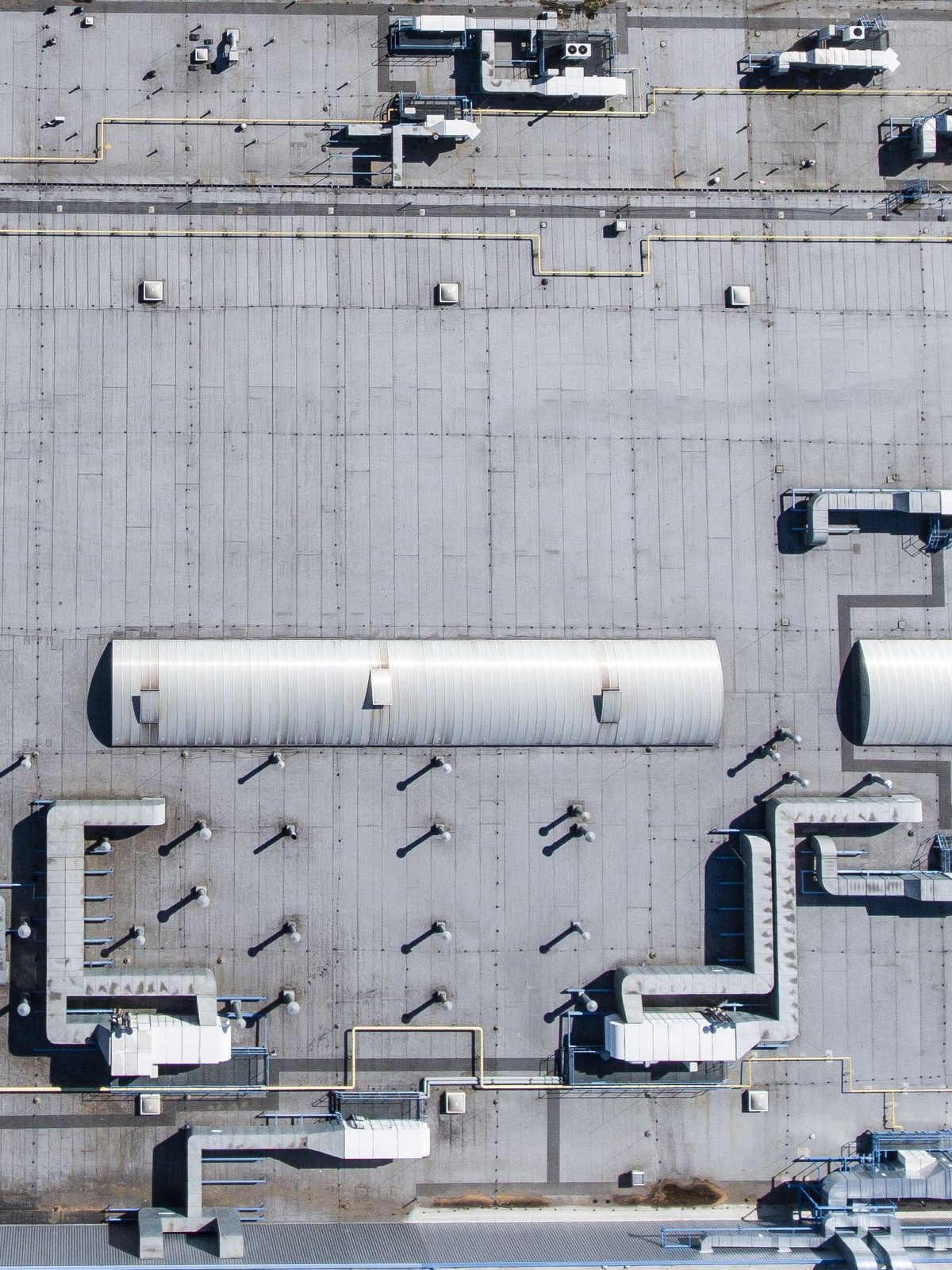
This is a checklist for testing the roof line in a capital reserve, whether you are writing it, reviewing one you inherited, or reading one inside a deal.
It assumes the figure already exists. The work is to find out what it rests on.
The inputs
| Check | What a problem looks like |
|---|---|
| Roof area used | A figure from a brochure or a floor plate rather than a roof plan |
| Roof age | A date nobody can evidence, or one that contradicts the surface |
| System and build up | Recorded as flat roof with no system named |
| Deck type | Unknown, which makes tear off cost unknown too |
| Insulation type and thickness | Missing, which makes a code upgrade unpriceable |
| Access and logistics | No allowance for crane, hoist, or a roof without vehicle access |
| Rooftop equipment | Units, arrays and screens not counted in the removal cost |
The assumptions
| Check | What a problem looks like |
|---|---|
| Remaining life | A round number with no basis stated |
| Basis of the estimate | Age based where a condition based figure exists |
| Cost per square foot | A national average applied to a specific building |
| Date of the last revision | Carried forward unchanged for three years or more |
| Inflation treatment | Applied to the cost but not to the timing |
| Contingency | None, or one too small to absorb a deck finding |
| Replacement scope | Recover assumed where a tear off is likely |
The timing
| Check | What a problem looks like |
|---|---|
| Replacement year against remaining life | The spend scheduled after the roof is expected to fail |
| Funding available in that year | The year chosen for the budget rather than for the roof |
| Sequence across a portfolio | Several roofs landing in one year by coincidence |
| Lease events | A replacement scheduled across a break or a fit out |
| Seasonality | Work scheduled in the season the roof cannot be opened |
| Interim repair spend | No allowance for keeping the roof going until the year arrives |
The omissions
| Check | Why it matters |
|---|---|
| Tear off and disposal | The largest single item a recover assumption hides |
| Deck repair | Unknown until the roof is open, and rarely zero |
| Equipment removal and reinstatement | Often a separate trade and a separate contract |
| Code required insulation upgrade | Can add materially to a like for like figure |
| Temporary protection and tenant works | Occupied buildings cost more than empty ones |
| Design and inspection fees | Small, routinely forgotten, and entirely predictable |
| Restoration as an alternative | Missing, so the cheaper route is never evaluated |
What to do with it
- Write the basis next to every number. Condition based or age based, in one word.
- Mark the unknowns as unknown. Deck condition unknown is a useful line; silence is not.
- Carry restoration and replacement where both are live. With the test that decides between them.
- Revise after events, not after months. A storm or a major repair is the trigger.
- Walk the roofs inside five years every year. These are the numbers that move.
- Keep the evidence with the figure. The next reviewer inherits the number either way, and should inherit the reasoning too.
Want the reasoning behind these checks? Read how the roof enters a capital plan and what a remaining life report provides.
Walked by Date Roof
Common questions
Why is the roof line so often wrong?
Because it is usually built from an age and a cost per square foot, and neither figure is measured on the building it describes. Once set, it is carried forward unchanged for years, because nothing forces anybody to look at it again.
- Age predicts nothing on a roof that has been maintained or neglected
- A generic cost per square foot ignores access, tear off and deck condition
- The figure is carried forward unchanged once it has been set
- Nobody revisits it until the roof forces the conversation
The fix is not a better formula. It is a condition based figure for the roofs that matter and a defensible estimate for the rest, with the basis of each written next to it so the next person can see at a glance which is which. That one word, condition or age, does more for a plan than another decimal place ever will.
How often should the roof line be revised?
Annually for any roof inside five years of replacement, and after any storm or any significant repair that has been carried out on it. A roof further out than that can sit on a longer cycle, provided somebody walks it occasionally and the figure carries a date.
- A roof inside five years moves fast enough to need a yearly look
- A storm changes both the condition and the likely funding route
- A major repair either extends the life or confirms the end of it
- A revision with no new information behind it is not a revision
Tie the revision to the inspection cycle rather than to the budget cycle. A number updated because somebody walked the roof is worth something. A number updated because it is October is the same number with a new date on it, and a dated number is more dangerous than an undated one because it looks maintained and nobody thinks to question it again.
What does remaining life actually mean here?
The period before the roof needs replacing rather than repairing, under the maintenance it is actually getting rather than the maintenance the contract describes. It is a condition judgment, not an age subtraction, and it should come with its evidence.
- It is a condition judgment, not an age subtraction
- It changes when maintenance changes, in both directions
- It should arrive with the evidence it was based on
- A range is more honest than a single year
Ask for the basis every time somebody quotes one. Remaining life stated as a bare number is the single most reused figure in capital planning, and it is reused precisely because nobody can see what it rests on. A range with a sentence of reasoning behind it is both more useful and easier to defend when the year arrives and somebody asks why the money is needed now rather than in three years. Write the range into the plan rather than rounding it to the middle.
Should restoration be in the plan as well as replacement?
Where the roof is a genuine candidate, yes, and both numbers should sit in the plan with the condition that decides between them written alongside. Restoration is the cheaper route but it needs a sound, dry build up underneath it, and that is a test rather than a judgment.
- Restoration is cheaper but needs a sound, dry build up
- Wet insulation rules it out whatever the surface looks like
- A restoration that fails early costs more than the replacement would have
- The deciding test is a survey, not a preference
Carrying both figures makes the decision visible rather than assumed. It also stops the cheaper number being adopted by default in a tight year, because the condition that unlocks it is written next to it and somebody has to state that the condition is met. That sentence is what prevents a restoration going onto a roof that cannot carry one, which is the most expensive way to save money on a roof.
What belongs in the plan besides the replacement cost?
Everything the replacement drags along with it, which is usually what makes the real number considerably larger than the estimate. Tear off, deck repair, equipment removal and code driven insulation upgrades are the four that are most often left out.
- Tear off and disposal, where a recover is not possible
- Deck repair, which is unknown until the roof is stripped
- Equipment removal, reinstatement and crane time
- Insulation upgrades required by current code
List the ones you cannot price yet as named unknowns rather than leaving them out altogether. A plan that says deck condition unknown is doing its job honestly. A plan that quietly assumes a sound deck is the one that produces a variation nobody budgeted for, in the middle of a project that has already started, when there is no longer any choice about paying it. Named unknowns are also easier to fund than surprises, because a board can approve a contingency it was warned about.