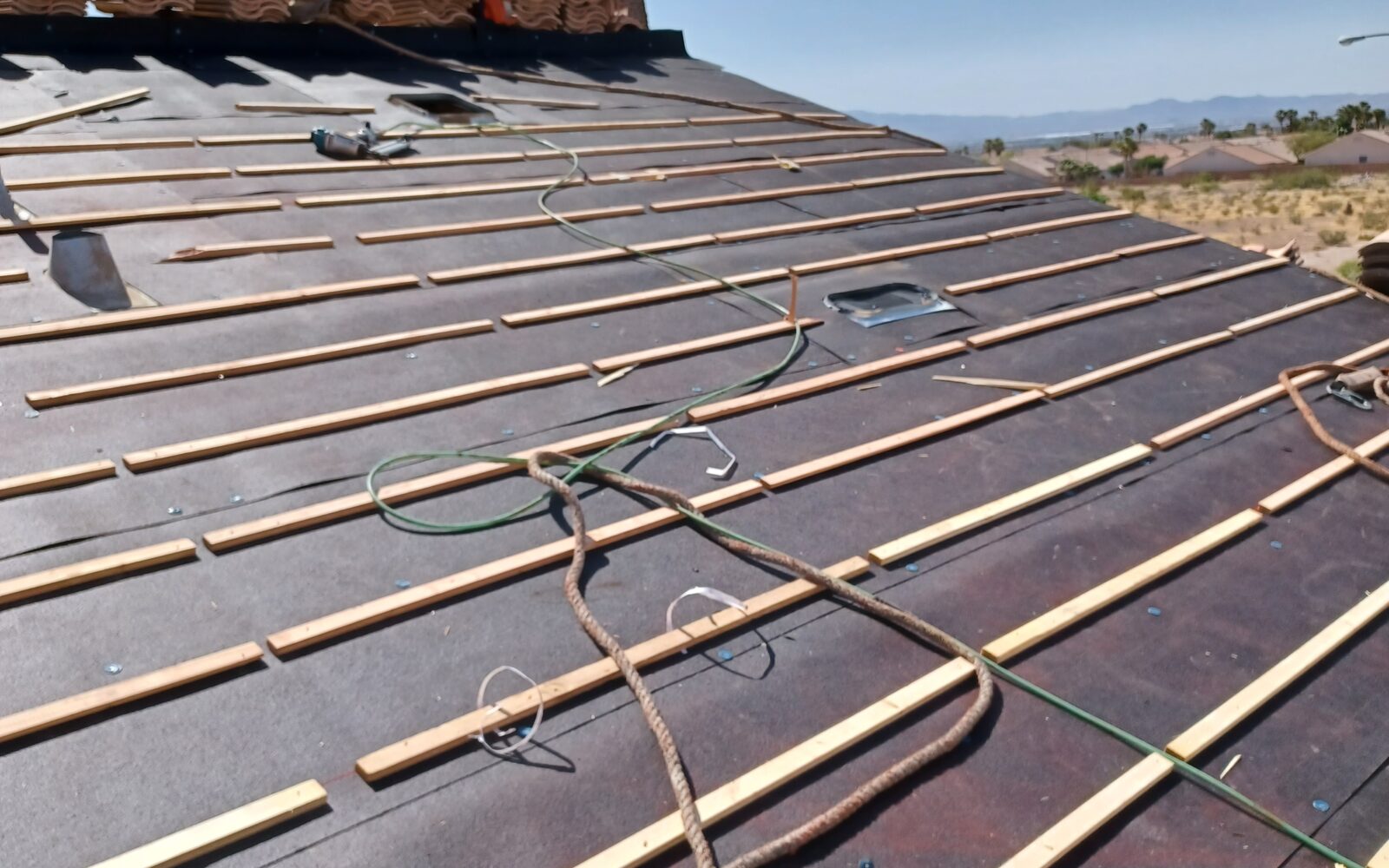
Model building codes generally allow a roof to carry two layers of asphalt shingles, and require a full tear off before a third. Local jurisdictions amend that, and several conditions force a tear off even at the first layer, so the number that applies to any particular building comes from the authority having jurisdiction over it rather than from a general rule.
For a buyer the number matters for a different reason. A roof with one layer still has options: it can be covered, restored or replaced. A roof at the limit has one route left, and that route is the most expensive version of the work.
Why an overlay happens
Because it is cheaper on the day, and often substantially so. Nothing comes off, nothing goes to landfill, the deck is never exposed and the building stays closed in throughout. On a sound, dry, flat roof with code headroom, it is a legitimate decision rather than a shortcut.
What makes it a red flag is what it hides. The layer underneath stays exactly as it was, including anything wet, anything failing, and anything that should have been repaired first.
What to establish about layers
| Question | How it gets answered |
|---|---|
| How many layers | A core sample, or a cut at a detail, rather than a guess |
| What is in each layer | Covering, insulation, boards, and whether any of it is wet |
| When each went on | Permits, invoices and warranty certificates |
| Whether it was permitted | A permit record, or the absence of one |
| What the deck is | Steel, concrete, timber, and its condition where visible |
| Whether structure was checked | A structural opinion, if one exists |
The last two are the ones most often absent. An overlay recorded on a permit is a decision somebody signed off. An overlay nobody can find a permit for is a decision made quietly, and the rest of the file usually reads the same way. How unpermitted roof work affects a purchase covers the wider pattern.
The signs on the roof
When a roof is covered rather than replaced, everything above it stays where it was. That produces a consistent set of symptoms:
- Short upstands at parapets, curbs and walls, where the flashing no longer reaches far enough up.
- Low pipe collars, sitting close to the new surface.
- Buried or doubled edge metal, with a thicker than usual drip line.
- Doors and hatches that now open onto a raised surface.
- Telegraphing, where the shape of the layer below shows through the one above.
None of these is proof on its own. Together they are a strong enough indication to justify opening the roof, which is the only way the question gets settled.
What it does to the next replacement
Three things, all of them additions to the number.
Disposal. Every layer is tonnage, and tonnage is priced. Saturated material weighs considerably more than dry material, so a wet overlay is dearer to remove than the same assembly dry.
Deck exposure. The deck has not been seen since the original roof went down. What is found there is the single commonest source of change orders on a reroof, and it cannot be priced in advance with any confidence.
Code. Stripping back to the deck frequently triggers current energy code requirements, which on an older building means thicker insulation than what came off and a taller assembly at every detail.
Budget those as a contingency rather than as a line. Roof life expectancy covers how the condition of the existing layers changes the timing of all of it.
What this means for a deal
A roof at the layer limit is not a reason to walk away. It is a reason for the number in the model to be a tear off number, and for the diligence to establish the deck condition and the structural position before that number is agreed.
Where the window is short, the one test worth paying for is the core sample. It answers the layer count, shows what each layer is made of and tells you whether any of it is wet, which between them settle most of the question. The roof red flags checklist covers what else to look for on the same visit.
Common questions
How many layers of shingles does code allow?
Model codes generally allow two layers of asphalt shingles and require everything to come off before a third goes on. Local amendments vary, and several conditions force a tear off at the first layer, so the real answer always comes from the authority having jurisdiction over that building.
- Two layers is the common model code ceiling
- Jurisdictions amend it, so verify locally rather than assume
- A wet or deteriorated deck forces a full tear off
- Existing layers that are buckled cannot be covered
- Structural capacity for the added weight has to hold
The limit exists for two reasons. Weight, because each layer adds load the structure was not necessarily designed to carry, and inspection, because nobody can see the deck under two layers of covering. On commercial low slope assemblies the equivalent question is layers of membrane and insulation rather than shingles, and the same two concerns apply with the added problem that water trapped between layers has nowhere to go.
How do you tell how many layers a roof has without opening it?
From the edges, the penetrations and the paperwork, and none of the three is conclusive on its own. The reliable method is a small cut or a core sample, which is why a diligence scope that excludes any opening of the roof leaves this question answered by inference.
- Look at the roof edge and the drip line thickness
- Check the height of flashings against curbs and walls
- Short pipe collars suggest the roof grew upward
- Permits and invoices often record an overlay directly
- A core sample settles it and leaves a patch
The giveaways are usually at the details. When a roof is covered rather than replaced, everything above it stays where it was, so upstands get shorter, pipe collars sit low and the edge metal ends up buried or doubled. Those are strong signs rather than proof. Where the number of layers changes the budget, which it usually does, pay for the core sample and get an answer instead of an indication.
What does a second layer do to the structure?
It adds dead load that the frame was not necessarily designed to carry, and it does so permanently. On most buildings the margin absorbs it. On older structures, long span roofs and buildings already carrying rooftop equipment added since construction, that margin is the thing nobody has checked.
- Dead load is permanent, unlike snow or occupancy
- Equipment added over the years has already used margin
- Long span and older framing have less room
- Saturated layers weigh far more than dry ones
- A structural opinion is cheap against a reroof
The compounding case is the one to watch: an overlay on a roof whose insulation is already wet, under a building that has gained three rooftop units since it was built. Each of those on its own is manageable and the three together are a question for an engineer. Ask whether anybody has looked at the load path since the original design, because on buildings of a certain age the honest answer is usually no.
Does an extra layer shorten the life of the roof above it?
It can, and the mechanism is heat rather than weight. A covering laid over an existing one sits on a surface that stores and returns heat instead of letting it pass into the building, so the new layer runs warmer through the afternoon and ages faster than the same product would on a clean deck.
- The layer below acts as an insulating mass
- Higher running temperature drives faster aging
- Irregularities below telegraph through the new covering
- Fasteners have to reach the deck through both layers
- Defects below stay there and keep working
The second mechanism is shape. A new covering follows whatever is underneath it, so buckles, ridges and low spots come through, and the places where the old roof held water are the places the new one will. Neither effect makes an overlay wrong. Both make it a decision with a cost attached, and that cost belongs in the number rather than in a footnote. [Roof life expectancy](/articles/roof-life-expectancy/) covers what else moves it.
What should a buyer do about a roof that already has two layers?
Price the tear off, not the reroof. A roof at the layer limit has no cheap option left: the next replacement removes everything, pays for the disposal of both layers, and exposes a deck nobody has seen since the first roof went on. All three of those cost money.
- Disposal tonnage rises with every layer removed
- Deck condition is unknown until the tear off happens
- Budget a contingency for deck replacement, not a line
- Current energy code may require thicker insulation than before
- The work cannot be deferred by covering it again
This is why layer count belongs in the diligence file rather than in the inspection report alone. It converts a roof from an item with options into an item with one route, and it removes the cheapest way of buying time. Where the layers are also wet, the number grows again, because saturated material is heavier to remove and the deck beneath it is more likely to need work. [Roof red flags](/articles/red-flags/) sets this beside the others.