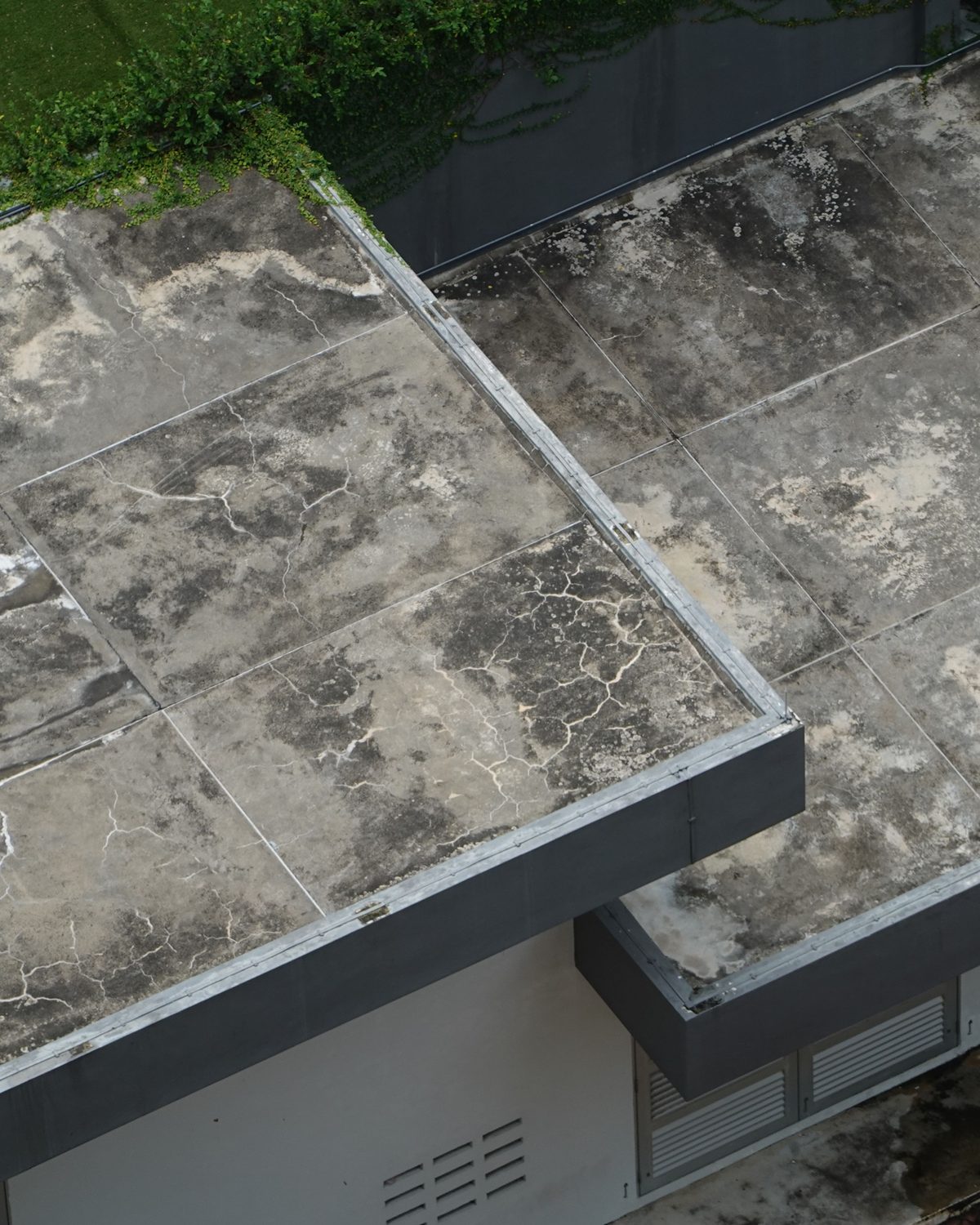
Unpermitted roof work is any roofing, mechanical or structural alteration to a roof that was carried out without the permit the local authority required, or under a permit that was never closed out with a final inspection. On commercial buildings it is common, and it is found during diligence more often than any other roof paperwork problem.
The reason is simple. A roof is invisible from the ground, tenants add equipment to it without telling anybody, and a reroof on a modest building can be completed between one quarterly site visit and the next. None of that is necessarily dishonest. It is simply the part of a building where work happens furthest from anyone’s attention, and the consequences arrive at the next owner.
What it looks like on the roof
- More layers than the permit record accounts for
- Two different membranes on one roof, joined somewhere in the field
- Rooftop units sitting on timber, blocks or sleepers rather than a flashed curb
- Penetrations sealed with mastic instead of a detailed flashing
- Satellite, solar or conduit fixed through the membrane
- A parapet or a skylight altered with no corresponding record
- Patch repairs in a material incompatible with the surrounding roof
Each of those is also a condition finding in its own right. What makes it a paperwork finding is comparing it with what the permit history says happened, which is the step that gets skipped. The roof red flags that change a reroof budget covers the physical side; this is the documentary side of the same walk.
How to establish what was permitted
- Request the complete permit history for the parcel from the building department
- List every roofing, mechanical and structural permit with its dates
- Check each one shows a final inspection, not just an issue date
- Ask the seller for the reroof contract, specification and warranty
- Have the inspector count the layers and record every penetration
- Compare the three records: the authority’s, the seller’s and the roof’s
Discrepancies fall into three groups, and they are not equally serious.
| What you find | How serious | Usual remedy |
|---|---|---|
| Permit record matches the roof | Nothing to do | Confirm and move on |
| An open permit never signed off | Serious, and blocks future permits | Seller closes it before completion |
| Work with no permit at all | Depends on the work | Price the remedy, or escrow it |
| Structural alteration with no record | Serious | Engineer’s opinion before you commit |
Why the layer count is the usual trigger
A roof carrying more layers than the record allows is the most common version of this, because an overlay is quick, cheap and hard to see. It matters at the next replacement, when the extra layer normally has to come off, and that is a cost nobody budgeted. What multiple roof layers do to a replacement sets out the arithmetic, and a core cut is the only way to count them with confidence.
The consequences that actually cost money
Code compliance is the main one. A reroof typically triggers the energy code in force today rather than the code that applied when the old assembly was built, so a roof with undeclared work may need more insulation, different edge detail and a different height at the perimeter than the seller’s budget assumed.
Then the warranty. Manufacturers warrant assemblies they approved, and an unapproved penetration or a repair by an uncertified contractor can end that cover for the area or for the roof. Ask for the document and read who holds it and what it requires, because a warranty that has not transferred is not an asset you are buying.
Last, the history itself. A roof with no documented installation has no verifiable age, no specification and no maintenance record, which means any remaining life figure rests on observation alone. That is a thinner basis than a buyer usually realises, and it should move the number rather than the narrative.
What to do about it before closing
Make the enquiry local and specific. A building department will usually describe the retroactive process for a described situation, and that answer converts an unknown into a scope, a cost and a timeline. Then choose between two remedies: the seller resolves open permits before completion, or you take a holdback sized on a real estimate. How a roof holdback is structured covers the second, and it is the faster of the two once the deal is moving.
Where to go next
Put the permit search into the document request at the start of diligence rather than at the end, and brief the inspector to count layers and photograph every penetration. What a diligence roof inspection covers describes the scope that makes this finding possible, and how the roof reads in a condition report is where it has to appear if anybody is going to act on it.
Common questions
How do I find out whether roof work was permitted?
Search the building department record for the address, then compare what it shows against what is physically on the roof. Most jurisdictions publish permit history online or release it on request, and the gap between the record and the roof is the finding.
- Request the full permit history for the parcel, not a summary
- Note every roofing, mechanical and structural permit
- Check each permit was closed with a final inspection
- Compare the dates against the seller's stated reroof date
- Ask the inspector to count layers and record penetrations
An open permit is as much of a problem as a missing one, because it means work was started under a permit and never signed off. Those sit in the record for years and surface when the next permit is applied for, which is usually the buyer's reroof. Ask specifically whether each permit shows a final inspection, since a list of permit numbers tells you nothing about whether anybody approved the work.
What does unpermitted roof work cost a buyer?
The cost is rarely the work itself. It is the price of bringing the assembly to current code at the next reroof, the loss of any warranty, the possibility of a retroactive permit process, and the difficulty of insuring or financing a building whose roof has no documented history.
- Current code may require more insulation than exists
- An extra layer must often come off at replacement
- No warranty means no recourse for early failure
- Lenders and insurers ask for documentation
- Retroactive permitting takes time as well as money
Price the consequence rather than the offence. Work out what the next reroof costs with the undeclared layer removed and current code met, then compare it with the budget you were carrying. That difference is a number you can take into a negotiation, which an observation about missing paperwork is not. The timing matters too, because a roof with no history should be assumed to be nearer the end of its life than the seller suggests.
Does unpermitted work void a roof warranty?
It usually voids whatever warranty covered the area that was altered, and on a system warranty it can affect the whole roof. Manufacturers warrant an assembly they inspected and approved, and work carried out by somebody else, without notice, sits outside that.
- Unapproved penetrations are a common voiding event
- Repairs by an uncertified contractor can end cover
- System warranties require notice before alterations
- Check the warranty is registered to the current owner
- A warranty does not transfer automatically on sale
Ask for the warranty document itself rather than a statement that one exists. Read who holds it, what it covers, what it excludes, what maintenance it requires and whether it transfers on sale and on what terms. Then ask whether any alteration at all was notified to the manufacturer at the time. A warranty on a roof that has been cut into without notice is a document rather than an asset, and it should be priced as one.
Can unpermitted roof work be legalised after the fact?
Often yes, through a retroactive permit process, and the terms depend entirely on the jurisdiction. The authority may accept an engineer's or architect's certification of the existing work, or it may require opening the assembly so the work can be inspected properly.
- Rules differ by city and county, so ask locally
- Expect a certification requirement from a design professional
- Opening the assembly for inspection is sometimes required
- Fees and penalties are set locally
- Current code normally applies, not the code at the time
Make the enquiry during diligence rather than after closing, and make it about this address. A building department will usually describe the process for a described situation without being asked to commit to an outcome. That answer turns an unknown into a scope and a timeline, which is what lets you decide whether to ask the seller to resolve it before closing or to take a credit and handle it yourself.
Who is responsible for unpermitted work after closing?
The owner of the building, which after closing means you. Code obligations attach to the property rather than to the person who created the problem, so the practical answer is that any remedy has to be negotiated before the deal completes.
- Obligations run with the property, not the previous owner
- A seller representation is worth having but is slow to enforce
- A holdback is a faster remedy than a warranty claim
- Make the seller resolve open permits before closing
- Document what was found and when you raised it
There are two useful mechanisms. Ask the seller to close out open permits before completion, which is the cleanest result because the authority has to be satisfied rather than you. Or take a holdback sized on a real estimate of resolving it, released when the work and the paperwork are both done. Representations and warranties are a backstop, not a plan: the time and cost of enforcing one usually exceeds the sum in dispute.